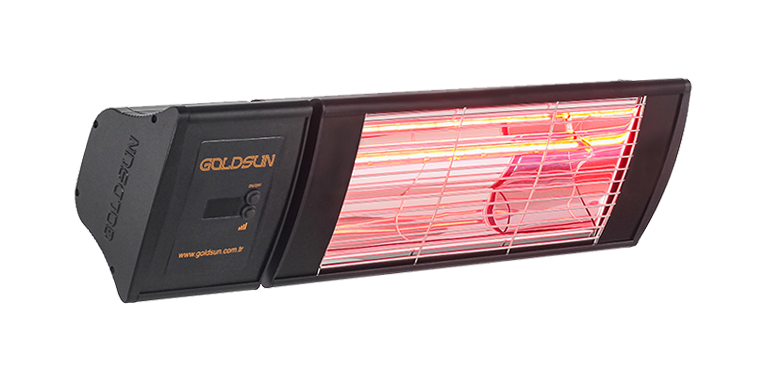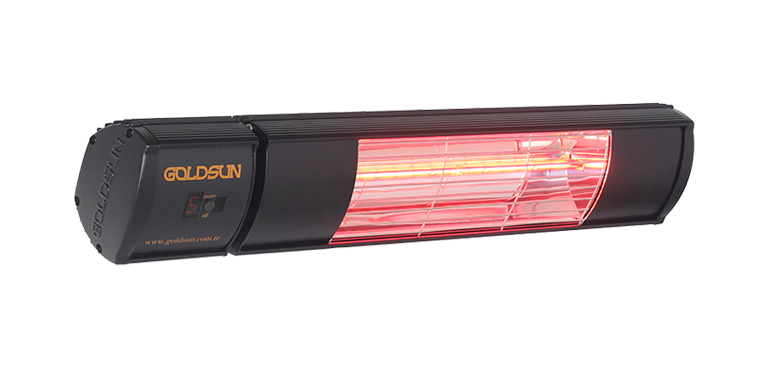












Infrared rays are categorized based on their wavelength into three main groups: short wave, medium wave, and long wave. As it moves from long wave to short wave, the radiation intensity per square meter increases. To emit short wave radiation, a surface temperature of 2250°C is required, whereas 1400°C is sufficient for medium wave, and 500°C is enough for long wave.
Short wave and other infrared wavelengths’ biggest difference is their ability to travel through air. All infrared wavelengths experience some energy loss while traveling through air, but this loss is much lower in short wave. Laboratory studies have shown that short wave infrared heaters can deliver 85% of their emitted radiation to the target surface, medium wave infrared heaters can deliver 60%, and long wave infrared heaters can deliver 40%. in terms of infrared efficiency, short wave products are 40% more efficient than their closest medium wave alternatives.